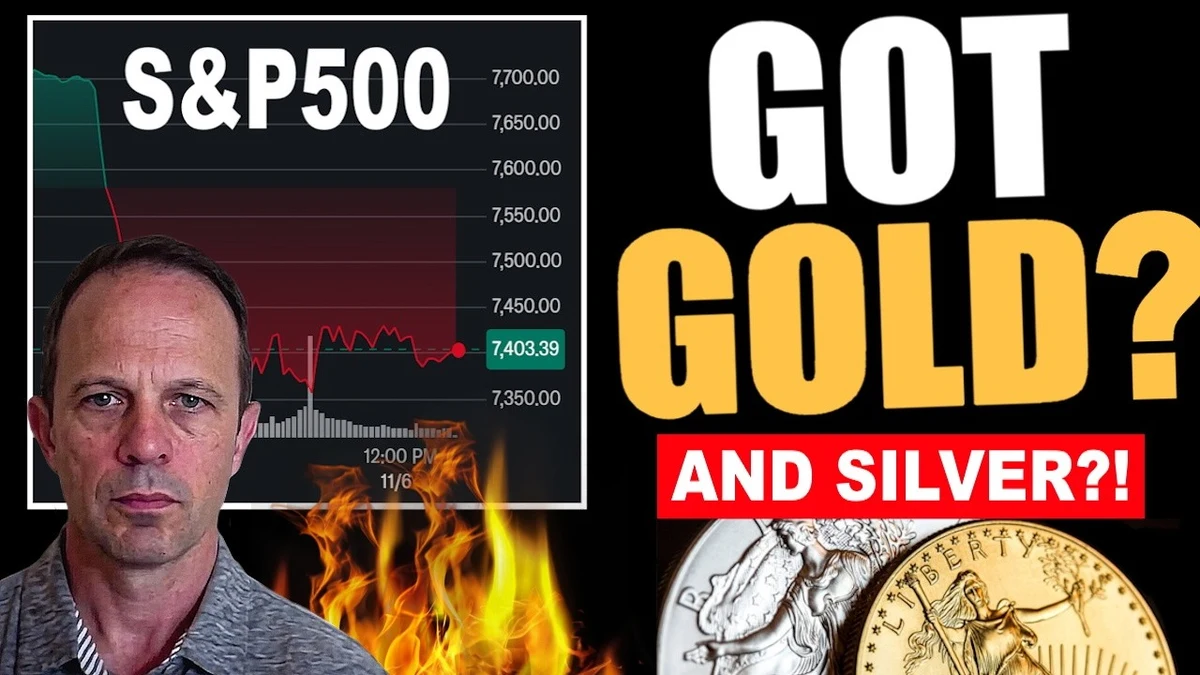
Silver at the Crossroads: Solid $50 Floor or Retail Bullion Trap?
✍️ Analista TroyRadar📅 18 de octubre de 2026⏱️ 10 min read👁️ 106 lecturas
📑Table of Contents
El canal especializado Silver Dragons ha encendido el debate en la comunidad de metales preciosos con un diagnóstico contundente: la plata enfrenta un momento crítico tras retroceder hacia la zona media de los 50 dólares. Con posturas enfrentadas entre analistas que prevén un letargo plurianual atascado entre 50 y 84 dólares frente a quienes anticipan una explosión inmediata al alza, los ahorradores e inversores de a pie se preguntan si estamos ante una ventana inmejorable para acumular metal físico o ante una corrección que todavía no ha tocado fondo.
🟡 Spot Oro de Referencia119.19 €/g
⚪ Spot Plata de Referencia1.63 €/g
⚖️ Ratio Oro / Plata (GSR)73.12 (Ventana Histórica de Valor)
📌 Puntos Clave del Análisis
Tesis Principal: El soporte psicológico y técnico en torno a los 50 dólares se percibe como el suelo del ciclo actual, pero las caídas del precio en papel rara vez se trasladan de forma íntegra a los mostradores de las tiendas físicas.
El dilema del rango (50$-84$): Aunque un estancamiento prolongado frustre a los especuladores de futuros, para el inversor patrimonial representa una oportunidad de acumulación metódica a precios de coste de extracción ajustados.
Lectura del Ratio Oro/Plata (73,12): Con el gramo de oro en 119,19 € y la plata en 1,63 €, el ratio favorece estadísticamente a la plata frente al oro para quienes buscan mayor recorrido porcentual.
Conclusión Operativa: En Europa, el impacto del IVA y los sobreprecios de acuñación exige descartar compras impulsivas y priorizar monedas bullion bajo régimen especial de bienes usados o lingotes en custodia exenta.
"La mayoría de los analistas coinciden en que los 50 dólares representan un suelo sólido para la plata; es posible ver caídas puntuales por debajo de ese nivel, pero cualquier excursión inferior será breve antes de un nuevo impulso."
— Silver Dragons, en su análisis de mercado
¿Suelo firme o trampa de papel? El soporte de los 50 dólares bajo la lupa
Cuando un creador veterano como Silver Dragons advierte sobre "un gran problema" en la cotización de la plata, conviene separar de inmediato el ruido del titular y examinar qué está ocurriendo bajo la superficie. El metal ha sufrido un retroceso visible hasta el rango medio de los 50 dólares (situando la cotización en unos 1,63 € por gramo en el mercado europeo), lo que desata el nerviosismo entre quienes compraron en la cresta de la última subida. La tesis que expone el canal estadounidense sostiene que la cota de los 50 dólares actúa como una barrera de contención muy difícil de perforar a la baja de forma sostenida, respaldada por costes crecientes de minería y una demanda industrial inelástica.
Desde la perspectiva de TroyRadar, este análisis acierta en la resistencia estructural del metal, pero peca de simplificar la mecánica de los mercados de derivados. Quienes operan futuros o derivados de papel en el COMEX y en Londres pueden forzar liquidaciones de posiciones apalancadas que empujen la cotización por debajo del soporte técnico durante días o semanas. La clave de esto es entender que el precio de pantalla no siempre refleja la disponibilidad del metal en las bóvedas: una ruptura bajista de los 50 dólares en el gráfico bursátil suele provocar, paradójicamente, una sequía inmediata de inventario en los distribuidores físicos, que se niegan a liquidar su mercancía a pérdida.
Por tanto, el comprador de metal en mano no debe obsesionarse con cazar el mínimo absoluto en pantalla. Si los 50 dólares representan el suelo de costes operativos para gran parte de los proyectos mineros primarios que enfrentan inflación energética y salarial, cualquier incursión por debajo de esa cifra será aprovechada de inmediato por la industria fotovoltaica, la electrónica médica y los fondos soberanos para absorber excedentes, garantizando una recuperación rápida del precio.
📊
Monitoriza el Precio Spot en Tiempo Real
Comprueba la cotización oficial por gramo y onza en euros antes de tomar decisiones de compra en distribuidores locales.
El rango de 50 a 84 dólares: la brecha entre el gráfico y la tienda física
Uno de los puntos más interesantes citados por Silver Dragons es la predicción de analistas institucionales que sitúan a la plata en un canal lateral amplio, oscilando entre los 50 y los 84 dólares durante los próximos años. Para el inversor impaciente que sueña con subidas parabólicas de la noche a la mañana, este pronóstico suena desalentador. Sin embargo, para quien construye un patrimonio intergeneracional con metal físico, un periodo de consolidación en este rango supone un escenario sumamente constructivo. Permite acumular onzas de forma predecible sin los pánicos de oferta que suelen bloquear las cadenas de distribución durante las burbujas alcistas.
Ahora bien, ojo con trasladar alegremente estas cifras en dólares al mercado europeo. Cuando un analista en YouTube habla de una plata a 50 dólares, lo que sale de tu bolsillo en una tienda de numismática o en un distribuidor autorizado en Madrid, Barcelona o Berlín es una cifra muy distinta. Si el precio spot marca 1,63 € por gramo (unos 50,70 € por onza troy), una moneda de inversión como la Filarmónica de Viena o la Britannia raramente bajará de los 60 a 63 euros una vez sumados los costes de acuñación, transporte y margen del distribuidor.
La distancia entre el gráfico de futuros y el mostrador se ensancha aún más en momentos de alta volatilidad. Si la cotización de papel se dispara hacia los 84 dólares previstos en la parte alta del rango, las primas comerciales sobre el metal físico suelen dispararse al unísono por escasez de cospeles en las cecas oficiales. En plata: esperar a que el metal confirme su despegue para empezar a comprar suele traducirse en pagar sobreprecios desorbitados que merman drásticamente la rentabilidad final.
La realidad europea: el impacto del IVA y las primas en el mostrador
El gran vacío que dejan habitualmente los creadores estadounidenses como Silver Dragons al analizar el mercado es la cuestión fiscal y regulatoria del viejo continente. En Estados Unidos, muchos estados han eliminado los impuestos sobre las ventas de monedas bullion de oro y plata. En España y en la Unión Europea, en cambio, la plata no goza de la exención de IVA que sí protege al oro de inversión bajo la Directiva 2006/112/CE. Comprar plata física en territorio español implica asumir el tipo general del 21% de IVA sobre lingotes nuevos, lo que eleva de inmediato la barrera de entrada para rentabilizar la operación.
Para sortear este obstáculo legal sin incurrir en irregularidades, el ahorrador español debe dominar dos alternativas fundamentales: las monedas bullion comercializadas bajo el Régimen Especial de Bienes Usados (donde el IVA se aplica únicamente sobre el margen del vendedor y no sobre el valor total del metal) o el almacenamiento en bóvedas francas aduaneras en jurisdicciones como Suiza. Comprar un lingote de plata estándar de un kilogramo en una tienda local pagando el 21% íntegro exige que el metal suba más de un 25% solo para empatar la operación al venderlo de vuelta al distribuidor.
Este detalle práctico cambia por completo la estrategia discutida en el vídeo. Mientras que en Norteamérica los coleccionistas y stackers pueden comprar pequeños tubos de monedas de una onza aprovechando cada bajada de tres dólares, en nuestro mercado la eficiencia de costes obliga a calcular el sobreprecio total (prima + fiscalidad) por gramo neto. Si no se calculan estos costes de antemano, el inversor minorista termina absorbiendo un sobrecoste que neutraliza las supuestas ventajas de comprar la caída.
🧮
Calculadora de Primas TroyRadar
Descubre con precisión matemática qué porcentaje sobre el spot real estás pagando en monedas y lingotes antes de comprar.
Ratio Oro/Plata en 73,12: qué nos dice la historia para rotar posiciones
En el vídeo se aborda también la posición relativa del oro y su comportamiento frente a la plata. Con las cotizaciones oficiales de TroyRadar registrando el gramo de oro a 119,19 € y la plata a 1,63 €, el ratio oro/plata se sitúa exactamente en 73,12 puntos. Esto significa que hoy hacen falta 73 onzas de plata para adquirir una sola onza de oro fino. Desde una perspectiva histórica y cuantitativa, este múltiplo se encuentra todavía en una zona claramente ventajosa para la plata.
A lo largo del siglo XX y lo que llevamos de siglo XXI, la media histórica del ratio ha fluctuado en torno a 55-60 puntos. Cada vez que el indicador se ha estirado por encima de 75 u 80 para luego corregir a la baja, el movimiento ha venido impulsado por una revalorización porcentual de la plata sustancialmente más agresiva que la del oro. Si bien el oro actúa como el ancla de estabilidad indiscutible para preservar capital frente a la degradación monetaria de los bancos centrales, la plata funciona como un resorte de alta volatilidad con doble componente: monetario e industrial.
La estrategia más inteligente para el inversor que gestiona ambos metales consiste en utilizar el ratio como brújula de rotación patrimonial. Con lecturas de 73,12, canalizar una porción mayor de la liquidez mensual hacia la plata permite acumular volumen físico con vistas a intercambiar una fracción de ese metal blanco por oro cuando el ratio se comprima hacia el entorno de 45 o 50 puntos en un futuro ciclo alcista. No se trata de elegir un metal contra el otro, sino de aprovechar la sincronía entre ambos activos.
Guía táctica para acumular plata física sin pagar de más
Frente a las especulaciones de si la plata romperá al alza hacia los 84 dólares o visitará fugazmente niveles inferiores a 50, la respuesta del inversor disciplinado debe ser estrictamente metodológica. En lugar de ejecutar órdenes masivas de compra con la esperanza de clavar el suelo del mercado, la técnica que mejores resultados arroja en metales físicos es el promedio de coste monetario (DCA) espaciado en compras trimestrales o semestrales.
A nivel de producto, conviene estructurar la cartera de plata en tres bloques bien diferenciados: primero, monedas bullion de reconocimiento universal (Filarmónica austriaca, Hoja de Arce canadiense, Canguro australiano) de 1 onza bajo régimen especial de margen, que ofrecen la máxima liquidez si necesitas vender rápidamente una pequeña cantidad de metal; segundo, monedas de mayor peso (10 onzas o 1 kilo) para reducir el coste de fabricación por gramo; y tercero, la asignación de capital a oro físico para aquellos patrimonios que no disponen de espacio de custodia segura ni desean asumir las complicaciones de peso y volumen inherentes a la plata.
En definitiva, la tesis de Silver Dragons sobre el suelo en los 50 dólares tiene fundamentos lógicos, pero el éxito de la inversión no dependerá de lo que haga la cotización en una sesión puntual, sino de la disciplina para evitar compras con sobreprecios abusivos en las tiendas locales. Mantener la cabeza fría, controlar los costes comerciales y entender la fiscalidad aplicable en tu país es lo que separa a un acumulador profesional de un comprador atrapado en el optimismo efímero de las redes sociales.
🧮
Simulador de Compra Física: ¿Cuánto metal adquieres hoy?
Selecciona o introduce un presupuesto en euros para calcular el metal fino estimado a precios de mercado actuales:
🟡 Oro Físico (prima media ~3,5%)~24.32 g (0.78 oz troy)
⚪ Plata Física (prima + IVA incluido ~22%)~1508.6 g (48.5 oz troy)
* Estimación orientativa basada en spot en vivo (119.19 €/g oro | 1.63 €/g plata) y primas ponderadas de distribuidores líderes.
Preguntas Frecuentes sobre la Inversión en Plata
¿Es conveniente comprar plata si el ratio oro/plata supera los 70 puntos?
Históricamente sí. Un ratio por encima de 70 indica que la plata está infravalorada respecto al oro. Muchos inversores aprovechan estos niveles para sobreponderar la compra de plata y rotarla hacia oro físico cuando el ratio desciende hacia cotas de 50 o 45 puntos.
¿Por qué el precio de una onza de plata en tienda es más caro que el precio en pantalla?
El precio que ves en pantalla (spot) corresponde a contratos de futuros de varias toneladas sin entrega inmediata. La moneda física que compras en tienda incluye los costes de refinado, acuñación en la ceca, transporte asegurado, margen comercial del distribuidor y, según el país o producto, impuestos como el IVA.
¿Qué formato es más recomendable para un particular en España: monedas o lingotes?
Por regla general, las monedas de una onza bajo el Régimen Especial de Bienes Usados resultan más eficientes fiscalmente que los lingotes de fundición nuevos, los cuales soportan el 21% íntegro de IVA. Para cantidades elevadas de capital, la custodia exenta de impuestos en almacenes francos fuera de la UE es otra opción muy utilizada.
The seasoned voice behind Silver Dragons has stirred the precious metals stacking community with a blunt diagnosis: silver is facing a critical juncture after retracing toward the mid-$50s zone. With institutional views divided between a multi-year consolidation range of $50 to $84 and forecasts calling for an aggressive breakout, real-world savers and bullion buyers need to understand whether this dip represents an ideal window to accumulate physical metal or an early stage of a wider paper sell-off.
🟡 Gold Spot Benchmark119.19 €/g
⚪ Silver Spot Benchmark1.63 €/g
⚖️ Gold / Silver Ratio (GSR)73.12 (Historical Value Window)
📌 Key Takeaways
Core Premise: The psychological and technical support around $50 per ounce is widely treated as the market floor, yet paper price slides do not immediately convert into cheaper coins at your local dealer counter.
The $50-$84 Range Dilemma: While a protracted sideways channel frustrates paper futures speculators, it provides long-term physical accumulators with an orderly window to stack ounces near real mining production costs.
Gold/Silver Ratio at 73.12: With spot gold at €119.19/g and spot silver at €1.63/g, the ratio remains historically elevated, signaling strong asymmetric upside potential for silver relative to gold.
Actionable Strategy: Retail buyers must look past headline spot figures, carefully audit coin fabrication markups and local tax regimes, and utilize systematic dollar-cost averaging to sidestep dealer liquidity traps.
"Most analysts agree that $50 seems to be the floor for silver and I agree. It is possible for silver price to go below $50 again in the future, but I think it would be short lived."
— Silver Dragons, from his market briefing
A Firm Floor or a Paper Trap? Deconstructing the $50 Price Support
When an established bullion content creator highlights that silver has slipped into the mid-$50s, savvy physical buyers must strip away sensationalism to evaluate the underlying mechanics. At current European spot valuations of approximately €1.63 per gram (matching the mid-$50s per ounce equivalent), market sentiment is being tested after recent highs. The argument put forward by Silver Dragons centers on the conviction that $50 represents a definitive structural floor, supported by rising all-in sustaining mining costs (AISC) and relentless demand from green tech manufacturers.
At TroyRadar, our quantitative desk recognizes the validity of that production cost barrier, but cautions against confusing paper exchange pricing with physical inventory realities. Speculators trading paper futures contracts on COMEX or the LBMA can trigger leveraged stop-outs that momentarily drive the spot print below major technical levels. The critical factor to bear in mind is that digital price action does not guarantee physical supply: whenever paper spot drops violently below key thresholds, mints and wholesale dealers routinely withhold volume or expand their over-the-counter spreads rather than sell their physical inventory at a loss.
Consequently, long-term accumulators should avoid trying to pinpoint the absolute bottom tick on a chart. If $50 marks the approximate breakeven floor for primary silver miners battling rising energy bills and operational inflation, any dip below that line creates an immediate supply deficit that industrial consumers—from solar photovoltaic lines to automotive electronics—step in to absorb, limiting downside duration.
📊
Track Real-Time Precious Metal Quotes
Monitor official spot pricing per gram and troy ounce in euros and dollars before placing orders with physical dealers.
The $50 to $84 Range: The Disconnect Between Screen Charts and Coin Shops
A crucial scenario highlighted in the Silver Dragons commentary is the projection by certain institutional analysts that silver could remain confined within a wide $50 to $84 band for several years. For short-term gamblers chasing vertical green candles, a multi-year consolidation sounds exhausting. For generational wealth builders holding real metal in personal vaults, however, a predictable trading range is the healthiest environment possible. It removes speculative mania, eliminates mint delivery bottlenecks, and allows steady accumulation without panic-driven retail premiums.
However, retail buyers must stay grounded when translating theoretical dollar targets into physical acquisitions. When commentators discuss $50 silver, the cash that leaves your pocket at a bullion desk in London, Frankfurt, or Madrid tells a completely different story. With spot silver hovering around €1.63 per gram (roughly €50.70 per troy ounce), standard one-ounce legal tender coins—such as the Austrian Philharmonic, the Canadian Maple Leaf, or the British Britannia—frequently command retail prices between €60 and €64 once distribution overhead, mint margins, and local handling fees are accounted for.
This spread between paper derivatives and physical metal expands dramatically during sharp price movements. If silver rallies toward the upper boundary of the $84 band, mint fabrication capacity invariably gets overwhelmed, causing coin shop premiums to spike simultaneously. In plain terms: waiting for price momentum to confirm a breakout before purchasing physical metal is a recipe for overpaying on retail markups that erode your net yield.
The European Reality: Premiums, VAT, and Counter Costs
One major blind spot in North American bullion discussions is the tax framework governing precious metals across Europe. In many US jurisdictions, bullion purchases are completely sales-tax exempt. In contrast, European buyers operate in a bifurcated tax landscape: while investment gold is strictly VAT-free across the European Union under Directive 2006/112/EC, physical silver bars carry standard Value Added Tax (such as 21% in Spain or 19% in Germany) unless specific margin-scheme structures or bonded customs storage are utilized.
To avoid absorbing an immediate 20% handicap on capital, European stackers must adopt smarter acquisition vehicles. The two premier routes are secondary-market bullion coins sold under the Special Scheme for Second-Hand Goods (where tax is levied exclusively on the dealer’s profit margin rather than the total metal value) or purchasing vaulted metal allocated within high-security bonded facilities in tax-free jurisdictions like Switzerland. Walking into a commercial shop to buy a freshly minted 1-kilogram silver bar with full 21% VAT means spot must jump nearly 25% just for the buyer to reach breakeven upon resale.
This operational reality fundamentally reshapes the stacking strategy outlined in the original video. In the US, stackers can opportunistically accumulate small one-ounce rounds whenever spot slides by a couple of dollars. In Europe, every acquisition must be scrutinized through net premium calculation per pure gram. Failing to do so turns a defensive wealth preservation strategy into a costly exercise in retail overpayment.
🧮
TroyRadar Premium Calculator
Calculate the exact percentage markup over pure spot price on any physical coin or bar before parting with your capital.
Gold/Silver Ratio at 73.12: Tactical Rebalancing Clues
The Silver Dragons video also contextualizes silver's price drop alongside gold's performance. Based on TroyRadar's live institutional pricing, with physical gold sitting at €119.19 per gram and silver at €1.63 per gram, the Gold/Silver Ratio (GSR) stands at precisely 73.12. In practical terms, it currently takes just over 73 ounces of silver to purchase a single troy ounce of fine gold. Historically, this metric points to an undervalued white metal.
Throughout modern financial history, the median Gold/Silver Ratio has oscillated between 55 and 60 points. Each time the ratio has stretched beyond 75 or 80 and subsequently normalized, the reversion was fueled by an aggressive percentage surge in silver relative to yellow metal gains. Gold functions as the sovereign foundation of capital preservation—unmatched in stability against monetary debasement—while silver operates as a leveraged satellite asset due to its duel role as an indispensable industrial commodity and monetary store of value.
For disciplined investors managing a dual-metal portfolio, a ratio of 73.12 serves as an actionable rebalancing trigger. Directing a larger share of regular monthly capital into silver during these readings builds tangible weight that can later be swapped into physical gold when the ratio eventually contracts toward the 45-50 zone during a broader bull run. Successful precious metals allocation is not about picking one metal over the other, but using mathematical disparities to compound total ounces over time.
Strategic Blueprint: Building Physical Exposure the Right Way
Rather than obsessing over whether silver will break through $84 tomorrow or briefly dip beneath the $50 benchmark, sensible investors rely on rigorous execution rules. Trying to catch the exact bottom of a volatile commodity cycle is a fool's errand. Instead, employing a disciplined dollar-cost averaging (DCA) framework across quarterly intervals reliably dampens market volatility while smoothing out dealer premium swings.
When selecting physical formats, segment your precious metals allocation into three specific buckets: first, high-liquidity 1-ounce government legal tender coins (such as Philharmonics, Kangaroos, or Britannia coins under special margin tax rules) for flexible resale in modest increments; second, larger-denomination formats (such as 10-ounce coins or 1-kilogram margin coins) to reduce fabrication overhead per gram; and third, pure investment gold bars or sovereigns for investors lacking high-volume secure home storage capabilities.
To conclude, Silver Dragons' assessment regarding the durability of the $50 silver floor carries solid market merit, but your long-term return will not be determined by YouTube commentary or spot fluctuations on a screen. Success comes down to cold execution: calculating the total premium at the counter, understanding your regional tax liability, and accumulating steadily regardless of short-term volatility.
🧮
Physical Bullion Allocation Calculator
Select or enter an investment budget to see estimated fine ounces and grams at live retail premiums:
🟡 Fine Gold (~3.5% avg retail premium)~24.32 g (0.78 oz troy)
⚪ Fine Silver (VAT + premium included)~1508.6 g (48.5 oz troy)
* Estimación orientativa basada en spot en vivo (119.19 €/g oro | 1.63 €/g plata) y primas ponderadas de distribuidores líderes.
Frequently Asked Questions About Silver Stacking
Is silver attractive when the Gold/Silver Ratio exceeds 70?
Historically, yes. A ratio above 70 indicates that silver is significantly underpriced relative to gold. Experienced investors often overweight silver accumulation in this environment, aiming to swap a portion into physical gold once the ratio compresses toward 50 or below.
Why do retail silver coins cost so much more than spot price?
Spot price represents large-scale paper futures contracts (typically 5,000 ounces) traded on institutional exchanges with deferred delivery. Retail coins carry costs for refining, minting, insured secure logistics, dealer profit margins, and applicable local sales or value-added taxes.
What is the best way to buy silver in European countries with high VAT?
European buyers typically favor secondary-market legal tender coins sold under the margin scheme (which minimizes VAT to the dealer's markup), or buy allocated bullion stored inside bonded, customs-free vaulting facilities in jurisdictions like Switzerland.
Utilizamos cookies propias y de terceros para asegurar el correcto funcionamiento de TroyRadar y guardar
tus preferencias de tema visual. Al continuar navegando, aceptas su uso legal.
⚡
Nuevos precios disponiblesHay cotizaciones actualizadas en el comparador.